
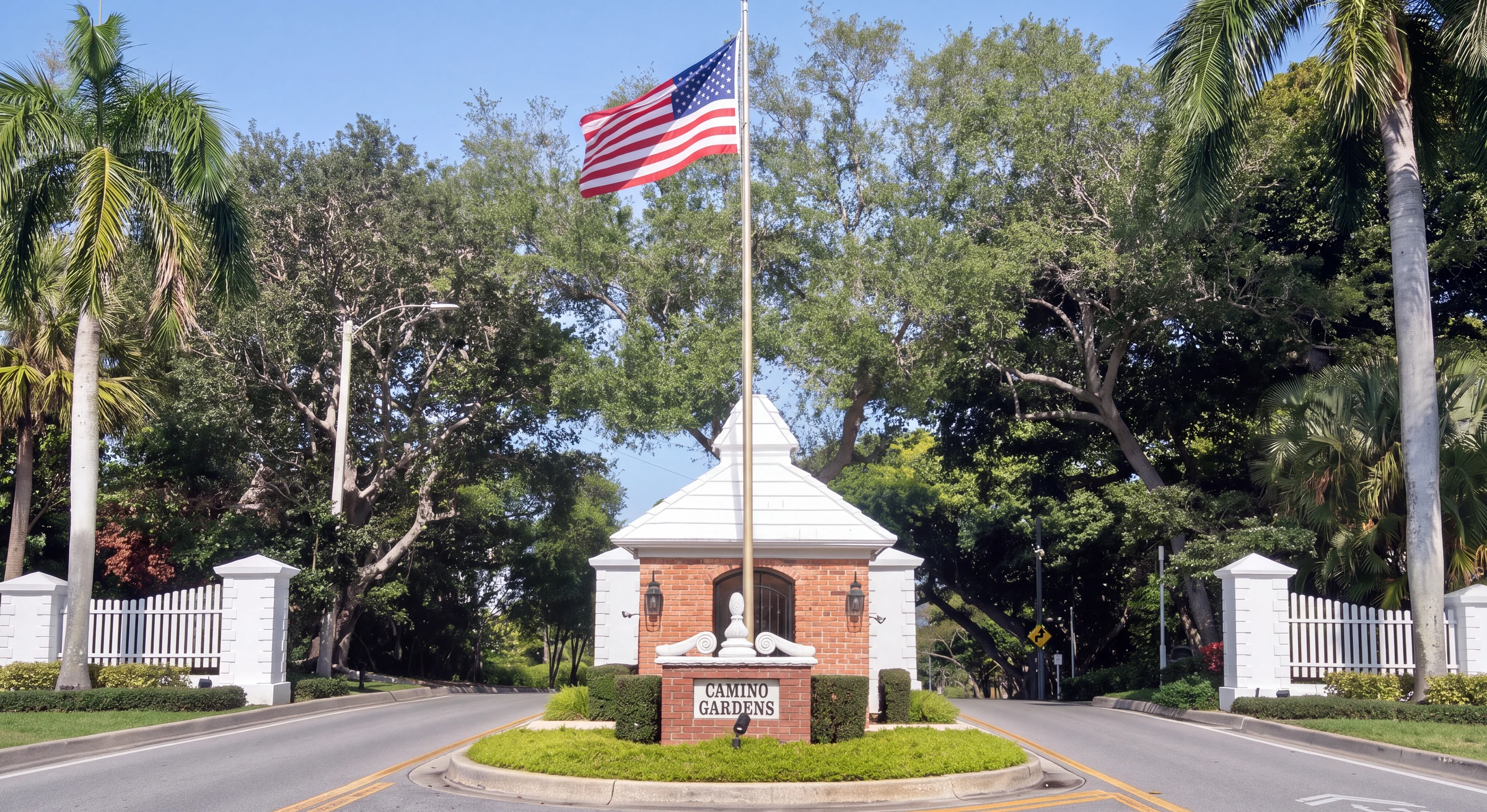
Camino Gardens
Homes for Sale in Camino Gardens
From 1953 to 1961 the land now called Camino Gardens was Africa U.S.A., a wildlife park where the animals roamed loose with no cages, fourteen years before Lion Country Safari opened up the road. The landscape was manufactured from end to end. Miles of lakes and canals were excavated out of flat South Florida ground, an artificial waterfall and a geyser were built to give the terrain height and motion, and more than 55,000 plants went into the soil. The animals were collected in Africa over seven months and brought across by steamship, a nine-week voyage into Port Everglades.
The park closed on September 4, 1961, and 177 acres of it were sold to become this neighborhood. The canals stayed. They run behind the houses today, and at some addresses the route to open water starts at a private dock in the back yard.
A Wild Beginning
John P. and Lillian Pedersen bought the land in 1950 and spent three years turning the northern part of it into the park. Boca Raton in 1953 was a town of a few thousand people, and Africa U.S.A. was one of its major attractions for the better part of a decade.
When the attraction closed, the peacocks stayed behind. The City of Boca Raton put up Peacock Crossing signs along Camino Real to protect them, and the signs promptly began disappearing, taken as souvenirs faster than the city could replace them. Longtime residents tell that one first. The park did not so much end as get built over.
Water with a Past
Waterfront buyers come here for calm and quiet streets, for canals that eventually lead out to the ocean, and for the rarity of finding both inside East Boca. That canal system is born of the original waterways excavated in the 1950s for the park. Those channels run 81 to 120 feet wide, and today pass seawalls, private docks and boat lifts. At some addresses a boat can leave its dock and run out to the Intracoastal and the ocean beyond. The route out passes under fixed bridges, so the height of a boat decides what can make the run, which is a question for the individual address.
Not every address here comes with a dock, and the same water is reachable without one. North along the Intracoastal, at James A. Rutherford Park at 600 NE 24th Street, the city keeps a solar-powered kiosk stocked with four paddleboards and four kayaks, released by an app rather than a counter. Twenty-five dollars covers an hour, paddle and life jacket included, and there are monthly and annual passes for anyone who takes to it. The launch and the walkways are built for wheelchair access and the parking is free. There is no lifeguard on duty. It is the same waterway the canals behind these houses run into, reached from the other end.
At the entrance, a small park still holds exotic trees and shrubs planted for Africa U.S.A. and left to mature ever since, which is where the neighborhood's canopy comes from. A commemorative plaque there, dedicated by the Camino Gardens Association in March 2003, records what stood here. The Watusi Geyser once threw a thousand gallons a minute a hundred and sixty feet into the air, and Zambezi Falls dropped thirty feet beside it. Both belong to Camino Gardens' history, not to the neighborhood you would walk today.
The Houses Themselves
Camino Gardens was begun in 1962, which makes it one of Boca Raton's early residential neighborhoods, with a group of villas added in 1981. There are 420 houses and 26 villas. The prevailing form is the single-story Old Florida ranch under a white barrel tile roof, a consistent look the neighborhood has held onto while the interiors changed completely underneath it.
Homes generally run from about 1,600 to over 3,000 square feet, with two to five bedrooms, built in concrete block and stucco. A large share have been renovated, with updated kitchens, wood and tile flooring and impact glass, and many carry private pools, screened patios and outdoor kitchens in back. On the canal-front addresses the back yard is the entire argument for the house.
A Little Poetry in the Streets
Every street but the two that carry the community's own name is named for a tree or a fruit. Apple Tree Lane, Butternut Terrace and Sugar Plum Drive are the ones people quote, with Juneberry Court, Canistel Lane and Maypop Court behind them. Turning onto a storybook name to get home is a small pleasure that costs nothing and stays charming for years.
It also sets up the neighborhood's central contrast. Out front, sidewalks, tree names and a canopy planted for a wildlife park. Out back, a working waterway that reaches the ocean.
Where Camino Gardens Sits
The location is the other half of the value. Royal Palm Place is a little over a mile from the entrance, with Mizner Park and the Boca Raton resort barely further, and the beach just under two miles east. Interstate 95 is under a mile west, which makes West Palm Beach and Fort Lauderdale straightforward drives. Boca Raton Regional Hospital is about three miles north and the executive airport under five.
HOA fees
- HOA fee
$70.83 a month
As recorded July 2026
Fees are set by the association and can change at any time, so treat these as a guide and confirm with the association.
Public schools
- Elementary school
Addison Mizner School (K-8) for about 94% of homes; Boca Raton Elementary School for about 6% of homes
- Middle school
Boca Raton Community Middle School
- High school
Boca Raton Community High School
This community sits across more than one attendance zone, so the schools depend on which home it is. Attendance zones for school year 2026-2027 as published by the School District of Palm Beach County. Boundaries change, so confirm the zoning for any specific home with the district before you rely on it.
Camino Gardens Market Reports
Where It Is
Focus the map and use the arrow keys to move it. On a phone, use two fingers to move the map; one finger scrolls the page.
Featured Communities
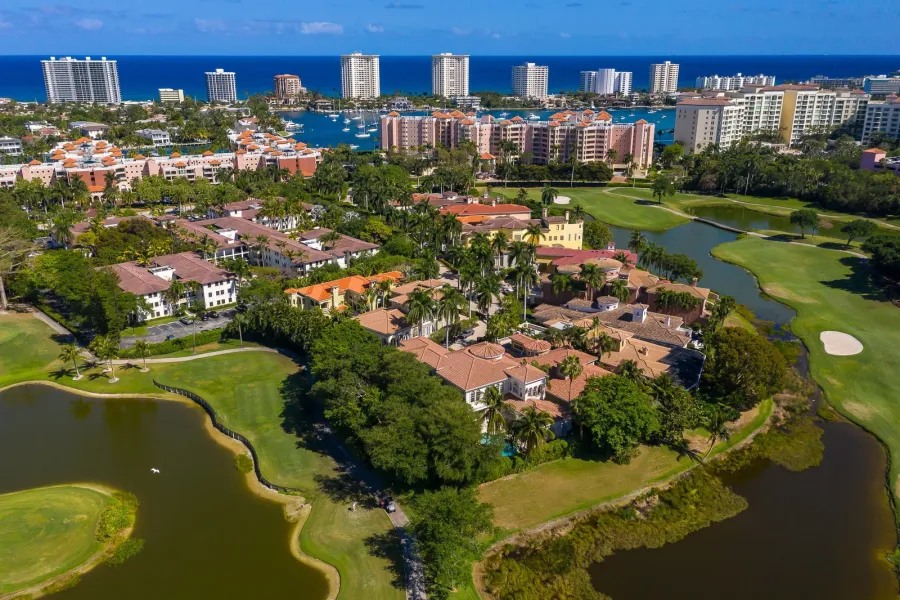 Addison Estates & Mizner Lake Estates
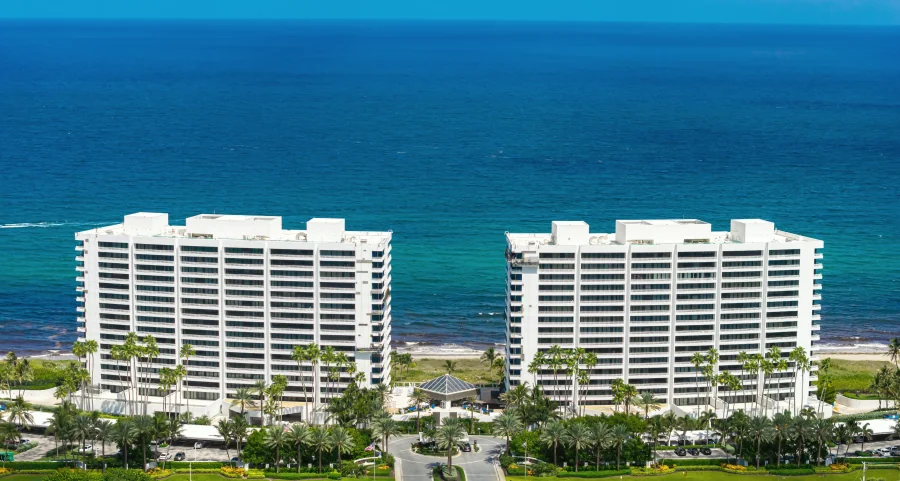 Addison on the Ocean
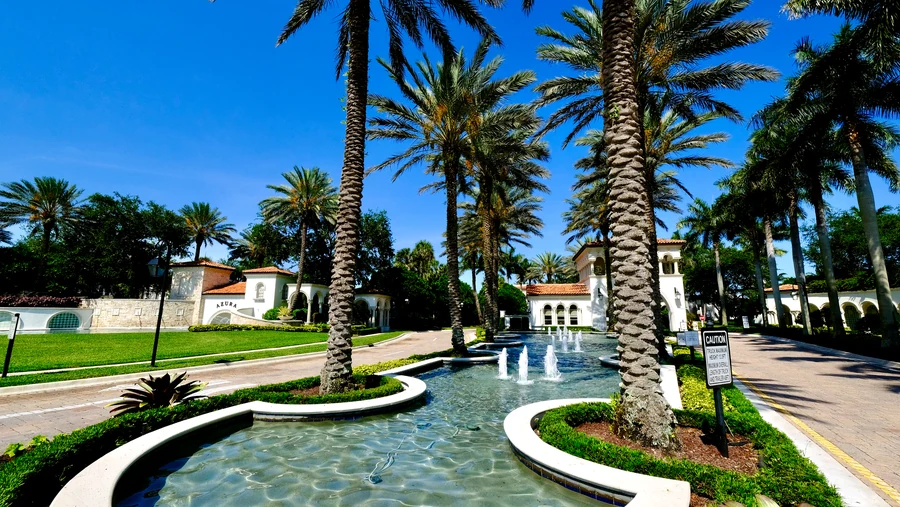 Azura
Azura
 Boca Bath & Tennis
 Boca Bridges
 Boca Pointe
 Bristol Pointe
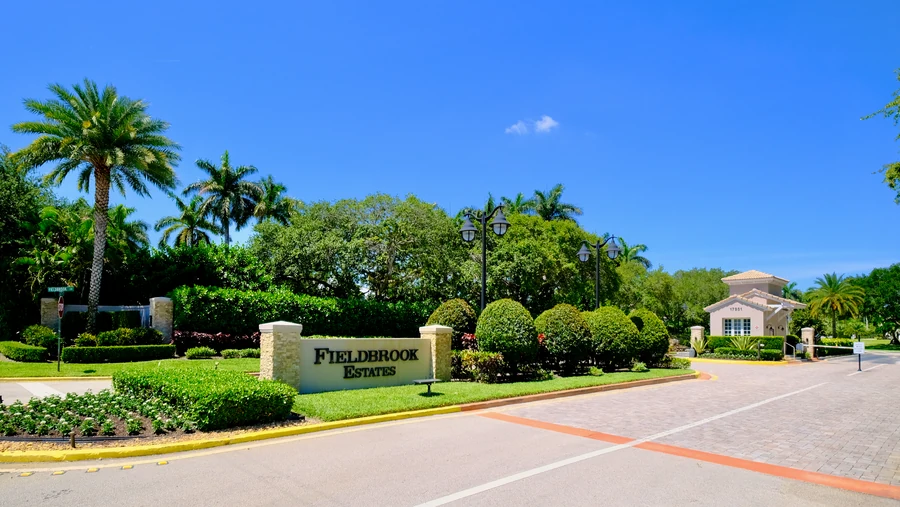 Fieldbrook Estates
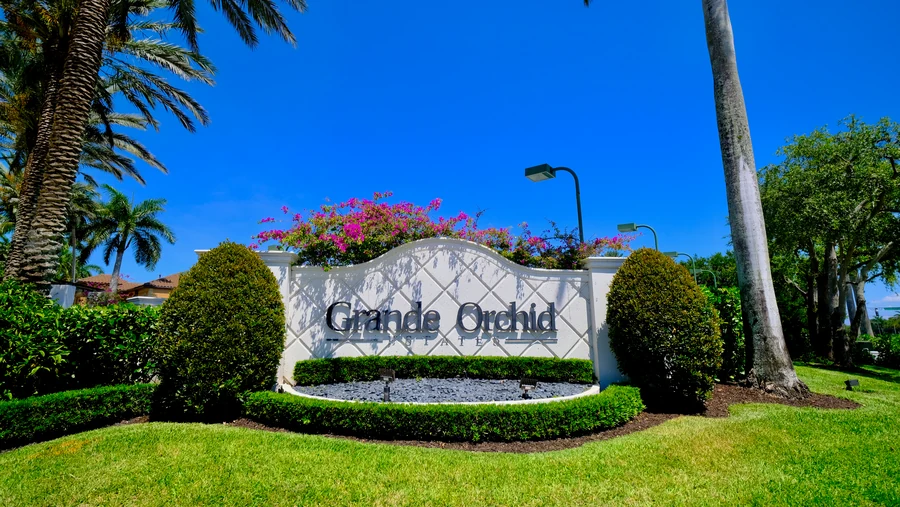 Grande Orchid
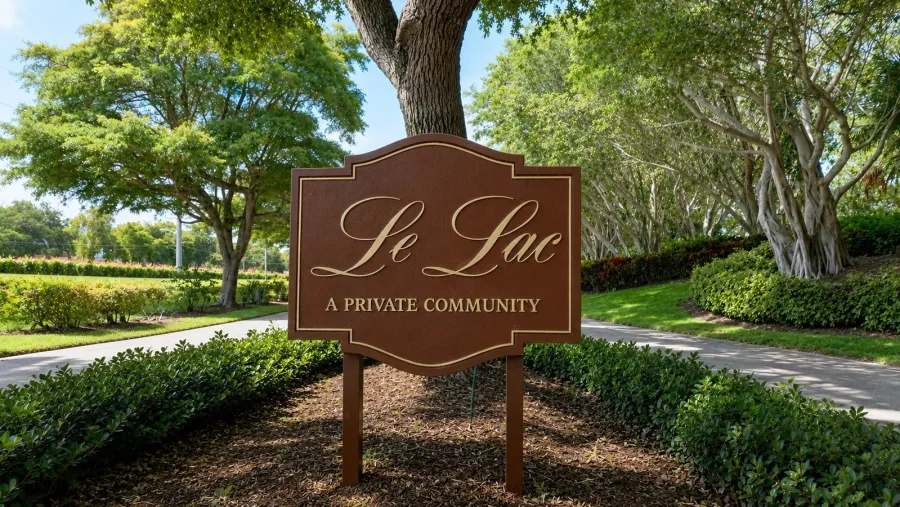 Le Lac
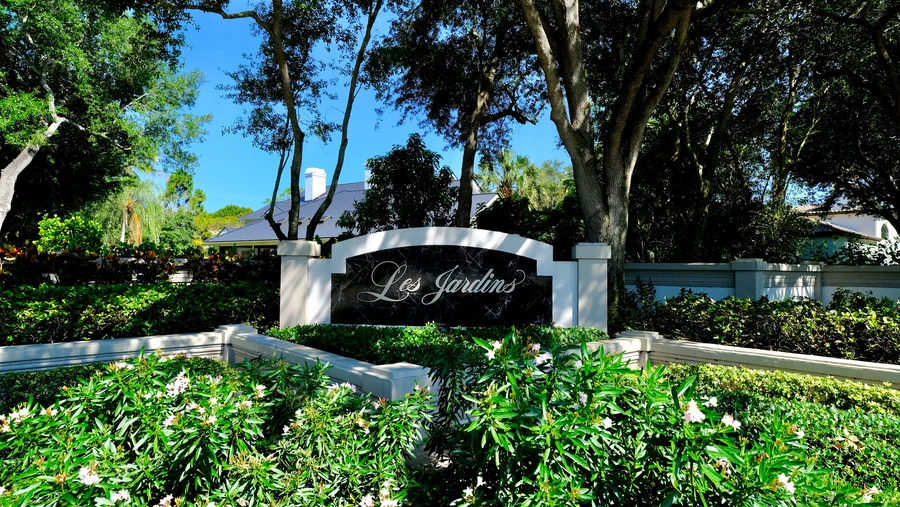 Les Jardins
 Long Lake Estates
 Lotus
Lotus
 Lotus Edge
 Mizner's Preserve
 Newport Bay Club
 Newport Cove
 Parkside
 Royal Palm Polo
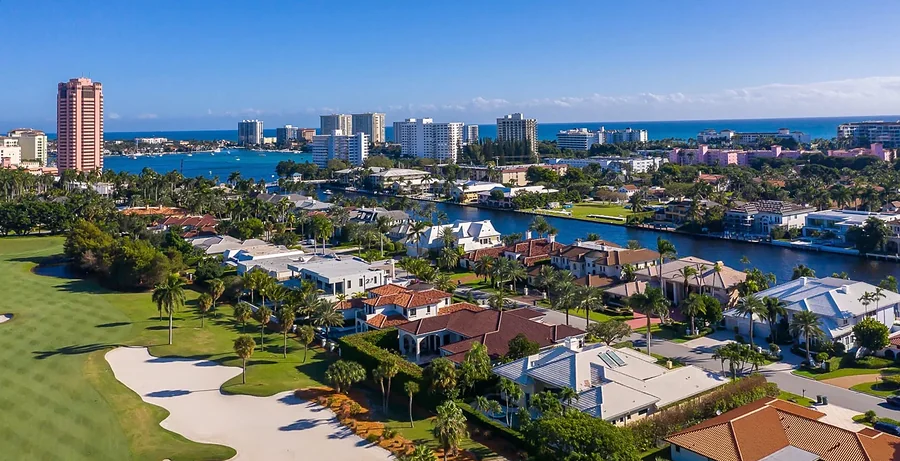 Royal Palm Yacht and Country Club
 Santa Barbara
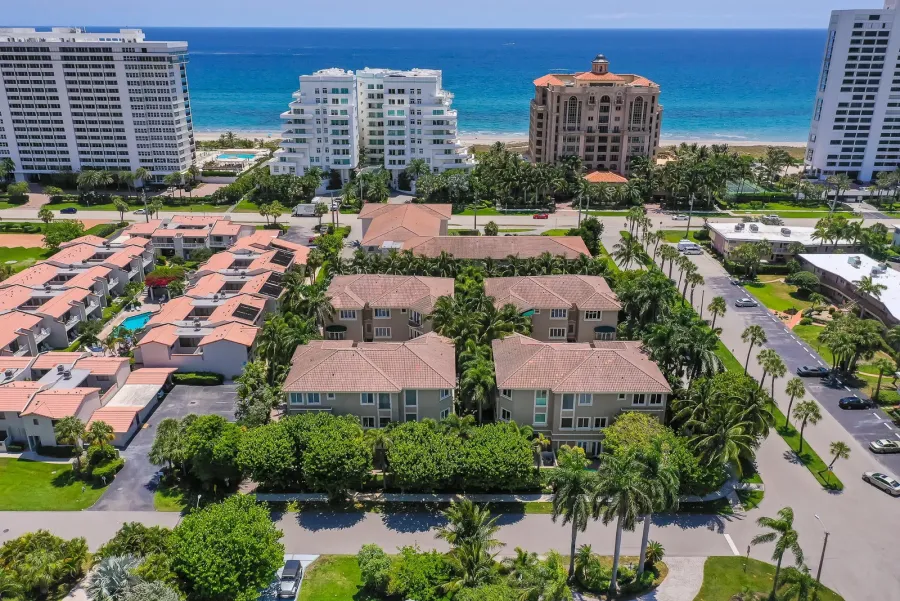 Saturnia By The Sea
 Seasons
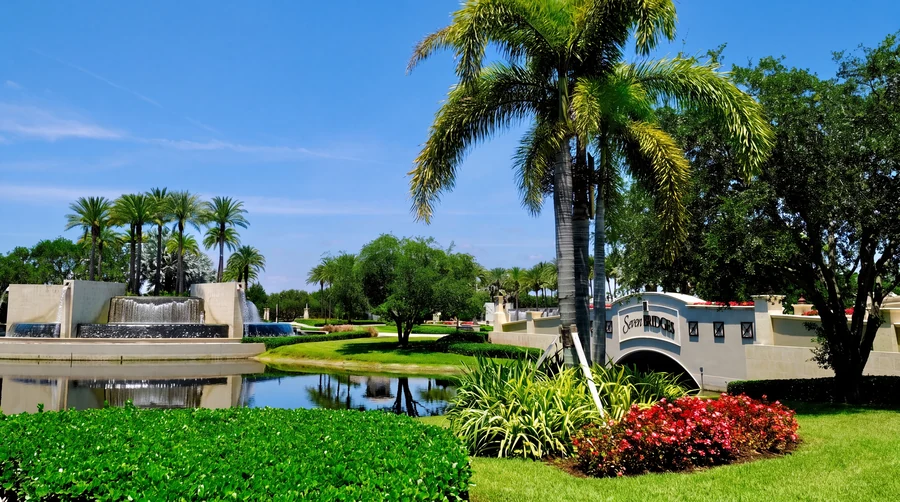 Seven Bridges
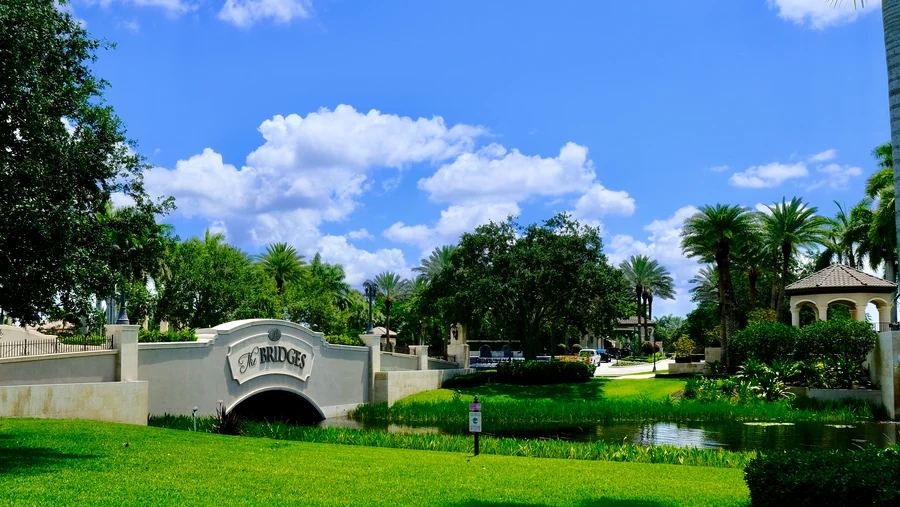 The Bridges
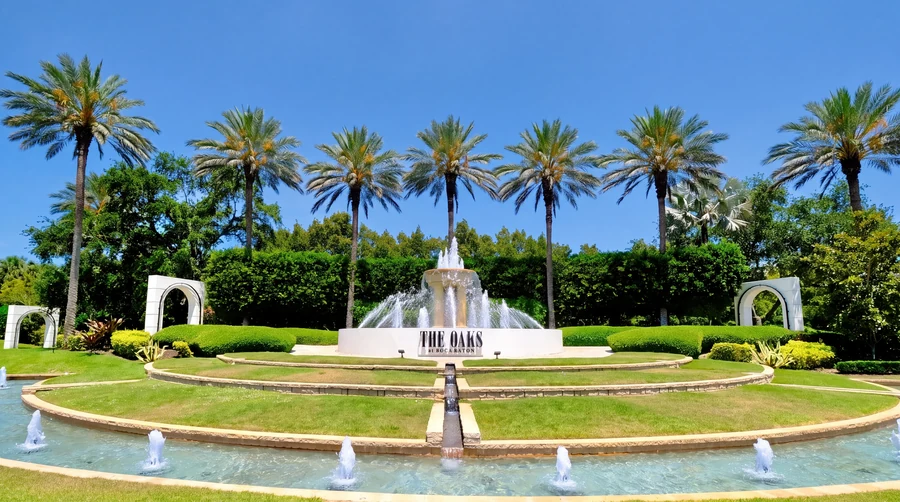 The Oaks
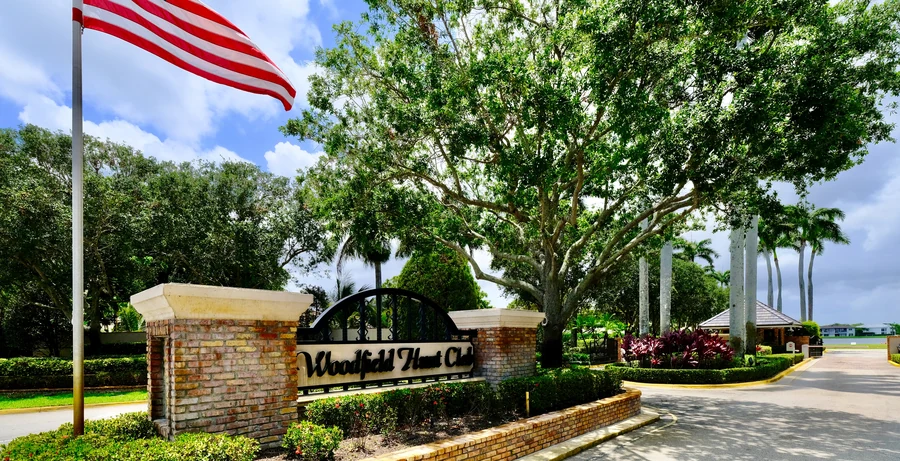 Woodfield Hunt Club